
IoT Technologies
The Internet of Things (IoT) improves links between people and
objects to a scope that we couldn’t imagine before.

GALLERY
The main objective of company is to provide with high quality
products and services which meet the needs and expectations of
GALLERY
The main objective of company is to provide with high quality
expectations of
THE TIME HAS COME
Internet of Things has much more benefits than difficulties if you have a right partner.
Connecting your devices, machines and things will allow you to get, analyze and resend information in real-time to
increase the effectiveness and upgrade your business models.

Why is it important
The number of IoT devices exceeds the global population 1,5 times and according to
analytic forecasts the number of connections will grow from 20 to 50 milliard by
2020. That means an average of about 10 devices for everyone on the planet.
The IoT ecosystem will quietly connect such devices as washing machines, bicycles, cars, doors, elevators, different sensors, security systems and weather controllers. All of us will buy things and devices with Internet of Things’ controllers which will become an integral part of our lives. The IoT net is going to have the explosive increase in the coverage and usage so all the cities in the world will be covered with this net by 2019.
The IoT ecosystem will quietly connect such devices as washing machines, bicycles, cars, doors, elevators, different sensors, security systems and weather controllers. All of us will buy things and devices with Internet of Things’ controllers which will become an integral part of our lives. The IoT net is going to have the explosive increase in the coverage and usage so all the cities in the world will be covered with this net by 2019.

Of your business
Water, energy and gas meters, temperature, pressure and moisture sensors, transport,
object and animal monitoring, remote control of domestic appliances and de vices –
and that isn’t full list of Internet of Things’ abilities. Autonomous and cheap
solutions that can work in every point of the world without expensive and
complicated infrastructure are the basement of IoT progress. And all this is
already reality.
The power of Internet of Things’ technologies bases on such opportunities as long autonomous work, wide coverage of the net, high penetration ability of ISM-waves, licensing-free, relatively low cost of solutions and small size of devices. These unique features of the Net868 technologies are the catalyst of new services and solutions in the global market.
The power of Internet of Things’ technologies bases on such opportunities as long autonomous work, wide coverage of the net, high penetration ability of ISM-waves, licensing-free, relatively low cost of solutions and small size of devices. These unique features of the Net868 technologies are the catalyst of new services and solutions in the global market.

Partnership
It’s important to have a stable and safe infrastructure to realize all the advantages of
Internet of Things. Hybrid Telematica can help to connect the unrelated nets, push the
limits of the growing traffic, use all the wide range of analytics and encourage the
development of the new class of intellectual applications to improve the effectiveness
without security compromising.

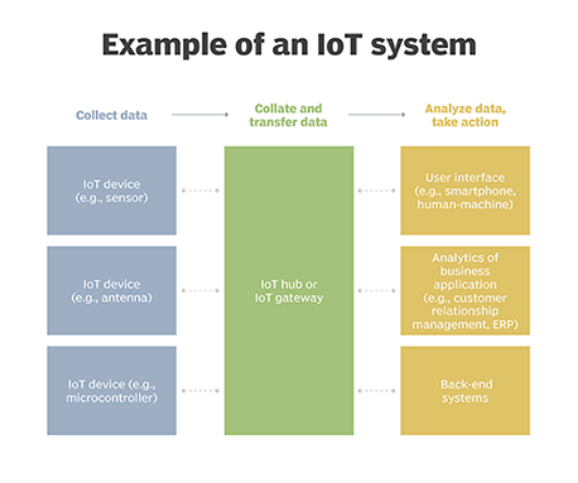
How IoT works
The number of IoT devices exceeds the global population 1,5 times and according to
analytic forecasts the number of connections will grow from 20 to 50 milliard by
2020. That means an average of about 10 devices for everyone on the planet.
The IoT ecosystem will quietly connect such devices as washing machines, bicycles, cars, doors, elevators, different sensors, security systems and weather controllers. All of us will buy things and devices with Internet of Things’ controllers which will become an integral part of our lives. The IoT net is going to have the explosive increase in the coverage and usage so all the cities in the world will be covered with this net by 2019.
The IoT ecosystem will quietly connect such devices as washing machines, bicycles, cars, doors, elevators, different sensors, security systems and weather controllers. All of us will buy things and devices with Internet of Things’ controllers which will become an integral part of our lives. The IoT net is going to have the explosive increase in the coverage and usage so all the cities in the world will be covered with this net by 2019.


Benefits of IoT
The internet of things offers a number of benefits to organizations, enabling them to:
- monitor their overall business processes;
- improve the customer experience;
- save time and money;
- enhance employee productivity;
- integrate and adapt business models;
- make better business decisions; and
- generate more revenue.

Consumer and enterprise IoT applications
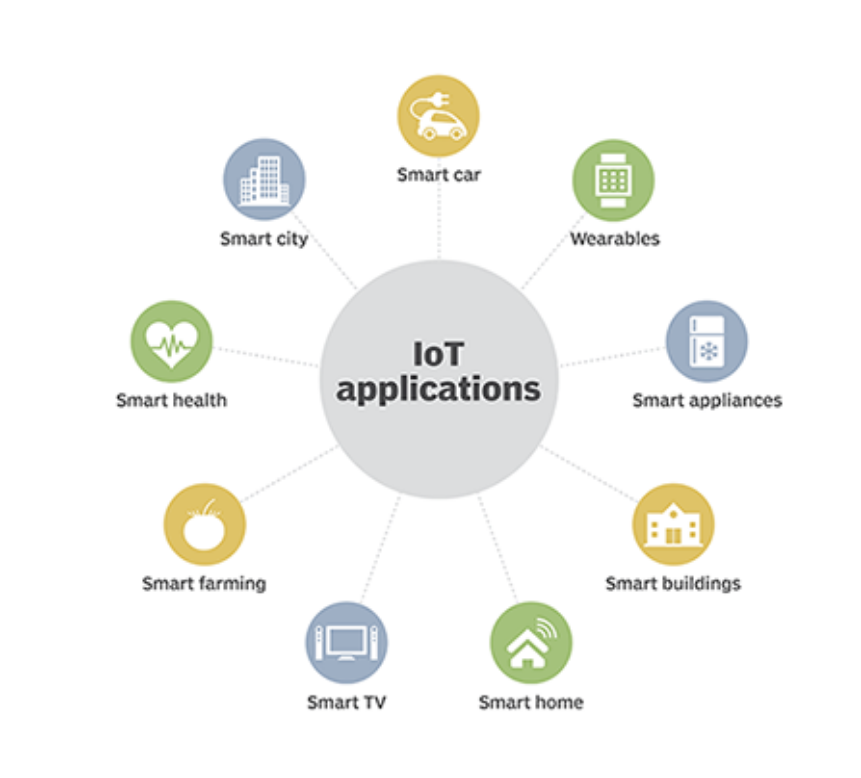
There are numerous real-world applications of the internet of things, ranging from consumer IoT and enterprise IoT to manufacturing and industrial IoT (IoT). IoT applications span numerous verticals, including automotive, telco, energy and more.
In the consumer segment, for example, smart homes that are equipped with smart thermostats, smart appliances and connected heating, lighting and electronic devices can be controlled remotely via computers, smartphones or other mobile devices.
Wearable devices with sensors and software can collect and analyze user data, sending messages to other technologies about the users with the aim of making users’ lives easier and more comfortable. Wearable devices are also used for public safety — for example, improving first responders’ response times during emergencies by providing optimized routes to a location or by tracking construction workers’ or firefighters’ vital signs at life-threatening sites.
In healthcare, IoT offers many benefits, including the ability to monitor patients more closely to use the data that’s generated and analyze it. Hospitals often use IoT systems to complete tasks such as inventory management, for both pharmaceuticals and medical instruments.
Smart buildings can, for instance, reduce energy costs using sensors that detect how many occupants are in a room. The temperature can adjust automatically — for example, turning the air conditioner on if sensors detect a conference room is full or turning the heat down if everyone in the office has gone home. In agriculture, IoT-based smart farming systems can help monitor, for instance, light, temperature, humidity and soil moisture of crop fields using connected sensors. IoT is also instrumental in automating irrigation systems.
In a smart city, IoT sensors and deployments, such as smart streetlights and smart meters, can help alleviate traffic, conserve energy, monitor and address environmental concerns, and improve sanitation.
In the consumer segment, for example, smart homes that are equipped with smart thermostats, smart appliances and connected heating, lighting and electronic devices can be controlled remotely via computers, smartphones or other mobile devices.
Wearable devices with sensors and software can collect and analyze user data, sending messages to other technologies about the users with the aim of making users’ lives easier and more comfortable. Wearable devices are also used for public safety — for example, improving first responders’ response times during emergencies by providing optimized routes to a location or by tracking construction workers’ or firefighters’ vital signs at life-threatening sites.
In healthcare, IoT offers many benefits, including the ability to monitor patients more closely to use the data that’s generated and analyze it. Hospitals often use IoT systems to complete tasks such as inventory management, for both pharmaceuticals and medical instruments.
Smart buildings can, for instance, reduce energy costs using sensors that detect how many occupants are in a room. The temperature can adjust automatically — for example, turning the air conditioner on if sensors detect a conference room is full or turning the heat down if everyone in the office has gone home. In agriculture, IoT-based smart farming systems can help monitor, for instance, light, temperature, humidity and soil moisture of crop fields using connected sensors. IoT is also instrumental in automating irrigation systems.
In a smart city, IoT sensors and deployments, such as smart streetlights and smart meters, can help alleviate traffic, conserve energy, monitor and address environmental concerns, and improve sanitation.